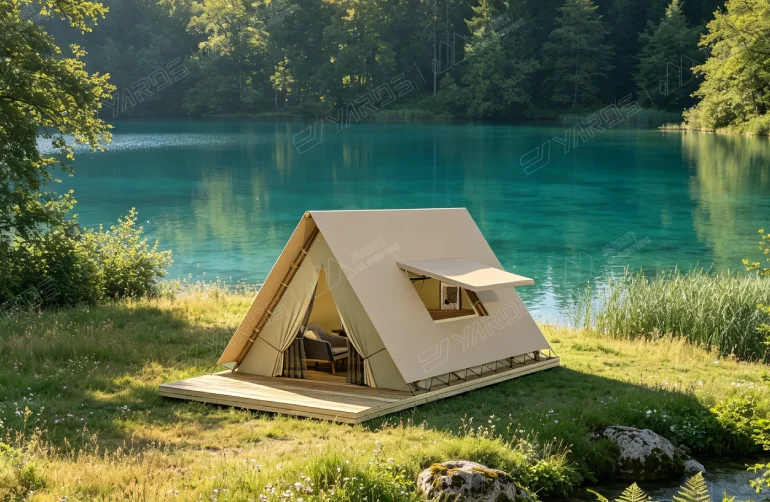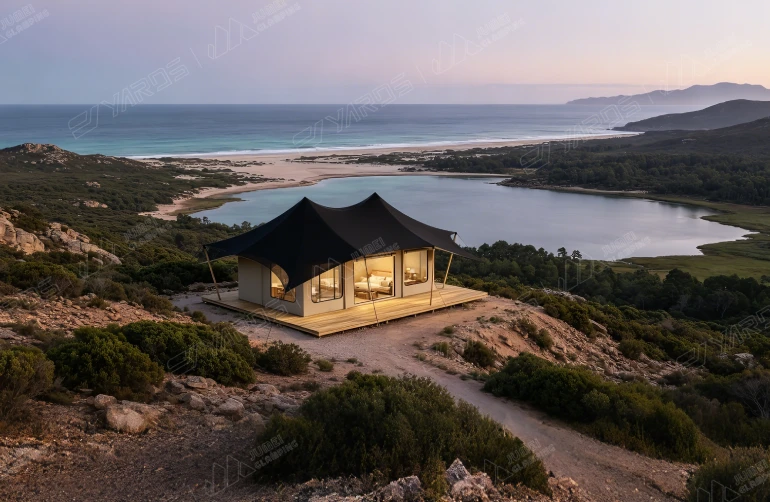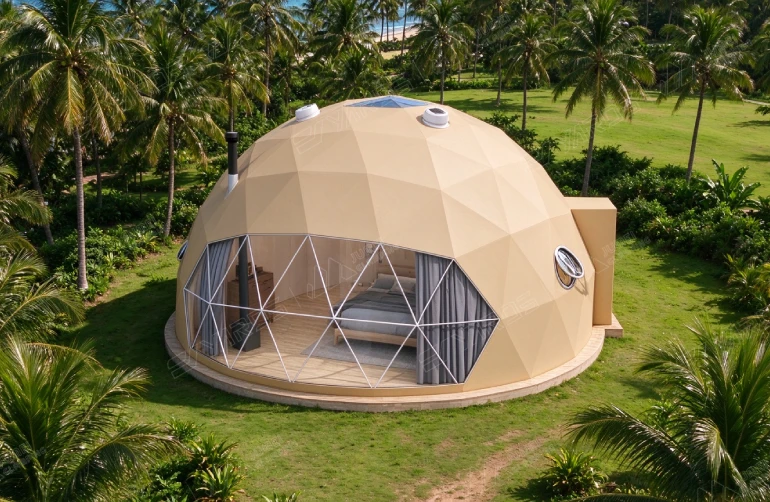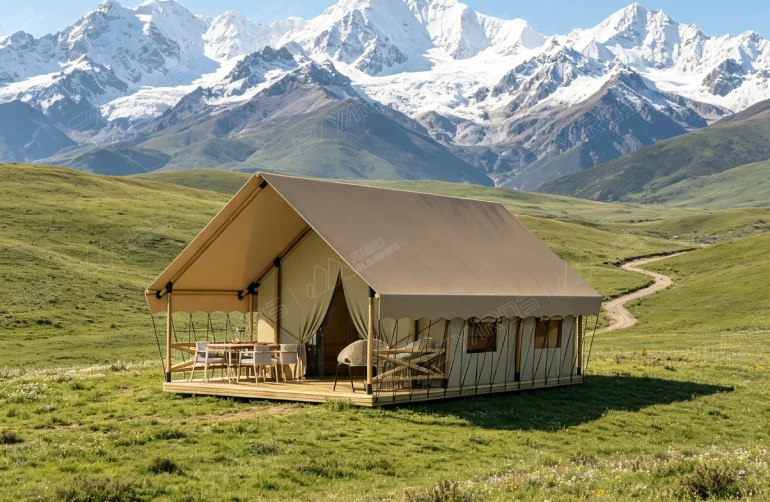
Custom Stretch Tents: Adapting to Different Terrain and Climates
09/15/2026
Safari Tent Manufacturers: Why After-Sales Support Matters
09/21/2026For investors developing a resort, buying a glamping tent is not simply an accommodation purchase. It is an investment in revenue-generating guest space. The return depends on the location, nightly rate, occupancy, operating costs, and the total cost of preparing each unit.
The Revenue Potential of Glamping
The global glamping market continues to expand. Grand View Research estimates the market at approximately $4.2 billion in 2026, with projected growth to $7.9 billion by 2033. The growth is driven by demand for luxury outdoor experiences that combine nature with modern comfort.
This creates an opportunity for resorts to offer accommodation at a premium compared with basic camping. Industry analysis suggests safari tents can achieve ADRs of roughly $175–$325 in some markets, with typical occupancy around 45%–65%, although actual performance varies substantially by destination and property quality.
How to Calculate the Payback
Before buying a glamping tent, investors should estimate annual room revenue rather than looking only at the purchase price.
A simple model is:
Annual Revenue = ADR × Occupancy × Available Nights
For example, a hypothetical tent with a $220 ADR and 55% occupancy would generate about $44,165 in annual room revenue before operating expenses and taxes. This is only an illustration, not a guaranteed result.
The real payback period must also include site preparation, foundations or platforms, bathrooms, utilities, furniture, landscaping, transportation, installation, cleaning, marketing, maintenance, and management costs.
Why Unit Cost Matters
The economics become more attractive when a resort can spread shared infrastructure across multiple units. Roads, water systems, wastewater treatment, reception facilities, landscaping, and other common facilities can serve several accommodation units instead of just one.
This is why buying a glamping tent should be considered as part of a complete resort development plan. A cheaper tent is not automatically the better investment if it has lower durability, fewer amenities, or a lower achievable nightly rate.
Location and Guest Experience Matter More
A beautiful tent cannot compensate for weak demand. Location, accessibility, scenery, local tourism attractions, seasonality, and competition all affect occupancy. The 2026 State of Glamping Report highlights nature connection and memorable, comfort-focused experiences as important factors in how travelers choose glamping accommodation.
A well-designed tent with a private bathroom, comfortable interior, outdoor deck, attractive views, and suitable climate control may support a higher ADR than a basic unit.
Making a Smarter Investment Decision
When buying a glamping tent, investors should compare the total installed cost with realistic local ADR and occupancy assumptions. It is useful to create conservative, expected, and optimistic scenarios instead of relying on one projected payback figure.
For a resort project, the strongest business model is usually not based on one tent. Multiple units can distribute infrastructure and operating costs while creating a complete destination experience. With the right location, pricing strategy, and cost control, glamping accommodation can become an important revenue-generating part of a modern resort.