
Stretch Tents for Sale: Overseas Procurement & Shipping
09/04/2026
Glamping Safari Tents For Sale: Installation Efficiency and Durability
09/09/2026The growth of outdoor hospitality is creating new opportunities for resort developers, especially as travelers increasingly look for nature, privacy, and memorable accommodation experiences. The global glamping market is projected to grow from about USD 4.2 billion in 2026 to USD 7.9 billion by 2033, while younger travelers remain an important customer group.
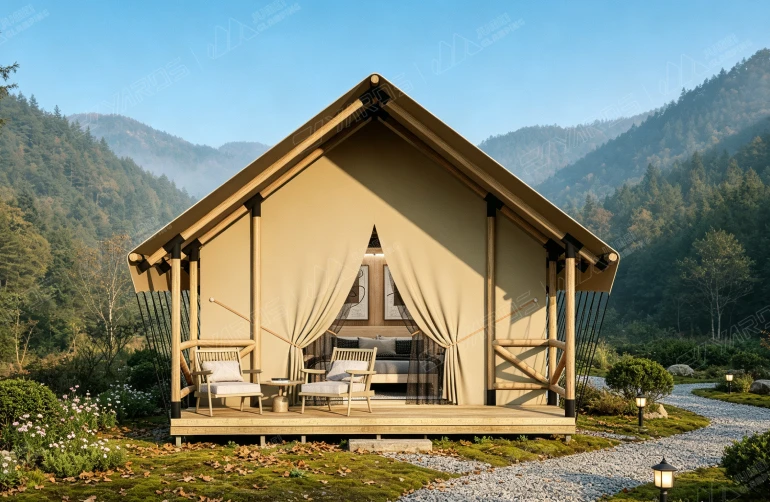
For investors planning to Purchase Glamping Tents, the decision should go beyond comparing factory prices. Product quality, site conditions, guest experience, transportation, and long-term operating costs can all influence the success of a resort.
Start With Your Resort Positioning
Before purchasing any accommodation units, define the type of guests the resort will target. Couples may prefer private tents with panoramic views and outdoor terraces, while families may require larger floor plans, bathrooms, and additional living space.
Luxury resorts may also need upgraded interiors, air conditioning, insulation, premium furniture, and larger decks. Defining the target market first makes it easier to select the right tent configuration and avoid paying for unnecessary features.
Match the Product to the Environment
Site conditions should be evaluated before you Purchase Glamping Tents. Mountain, coastal, desert, forest, and tropical locations can have very different requirements.
Wind exposure, rainfall, humidity, UV intensity, temperature changes, snow loads, and ground conditions may influence the choice of frame, fabric, insulation, foundation, and anchoring system. A tent designed for a dry climate may not automatically be suitable for a humid or high-wind location.
Manufacturers should be able to provide technical recommendations based on the project’s location.
Don’t Compare Products by Price Alone
A low factory quotation can look attractive during the early investment stage, but the cheapest product may not provide the best long-term value.
Investors should compare the frame material, fabric quality, waterproofing, insulation, windows, doors, flooring, connectors, and overall construction. Installation quality and maintenance also influence the usable life of outdoor accommodation.
A better approach is to compare the total cost of ownership, including maintenance and potential replacement costs, rather than focusing only on the initial purchase price.
Check What Is Included in the Package
Different suppliers may use different definitions of a “complete” glamping tent. One quotation may include only the frame, exterior cover, and insulation, while another may include bathrooms, flooring, furniture, lighting, air conditioning, and other facilities.
Before placing an order, request a detailed configuration list. This makes it easier to compare suppliers and calculate the real investment required for each rentable unit.
Consider Procurement Quantity and Future Expansion
The number of tents should match the resort’s expected demand, available land, infrastructure, and investment budget. Starting with a manageable number of units can allow operators to test occupancy, pricing, and guest feedback before expanding.
For larger projects, purchasing several units together can also simplify production, packaging, transportation, installation, and future maintenance. Standardized units make it easier to maintain consistent quality across the resort.
Plan Overseas Transportation Early
For international resort projects, logistics should be considered before production begins. Buyers need to confirm package dimensions, gross weight, container loading, shipping terms, destination port, customs requirements, local transportation, and installation arrangements.
The factory product price does not necessarily represent the final project cost. Shipping, customs duties, site preparation, foundations, utilities, cranes, and local labor may all need to be included in the investment budget.
Choose a Supplier That Can Support the Project
When you Purchase Glamping Tents, the supplier becomes an important part of the project. Investors should review manufacturing capability, previous projects, quality-control procedures, customization experience, technical drawings, installation guidance, spare parts, and after-sales service.
A reliable manufacturer can also help identify problems before production, especially when the project involves unusual terrain or demanding climate conditions.
Think About Operations, Not Just Installation
A glamping resort is a hospitality business, so the accommodation must be practical for daily operation. Cleaning, linen changes, bathroom maintenance, air conditioning, electrical systems, fabric care, and replacement components should all be considered during procurement.
The 2026 glamping market is increasingly professionalizing, with guests expecting comfortable amenities and operators placing greater emphasis on year-round performance and operational efficiency.
This means the best product is not necessarily the most visually impressive one. It should provide a balance between design, comfort, durability, maintenance, and operating cost.
Final Thoughts
To Purchase Glamping Tents successfully for a resort project, investors should evaluate the entire investment rather than treating the tent as a simple construction product.
Start with the target guests and resort positioning, then consider the site, climate, structure, materials, interior configuration, quantity, logistics, installation, and supplier support. A carefully selected product can improve guest experience while helping the resort control long-term operating costs.
The strongest procurement decision is ultimately the one that connects product quality with the project’s location, customer expectations, and business model.