
Buy a Glamping Dome: Understanding the Purchasing Process
05/12/2026
Glamping Safari Tents for Sale: Key Installation Considerations
05/16/2026When Buying a Glamping Tent for a resort or outdoor hospitality business, investors often focus on two important questions: what determines the total cost, and how many tents are suitable for starting a project. Understanding these factors is essential for creating a balanced and sustainable resort operation.
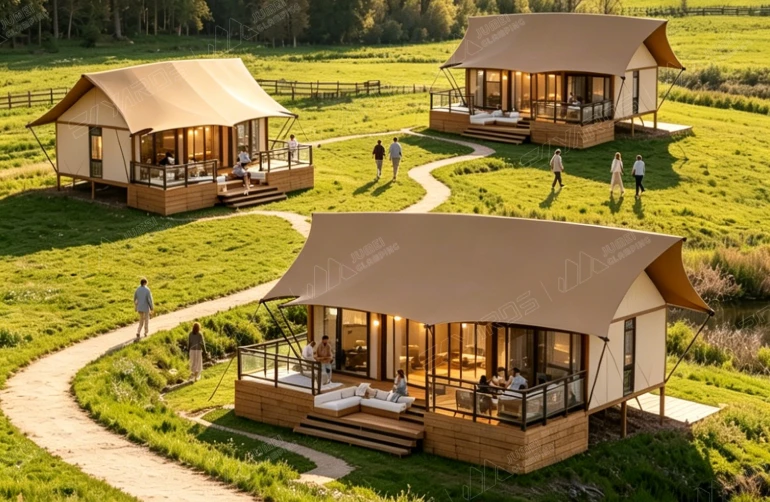
The cost structure of a glamping tent is influenced by several key elements. One of the biggest factors is the tent size and layout. Larger tents with multiple living areas, bathrooms, or viewing spaces naturally require more materials and structural support, increasing the overall investment.
Material quality also plays a major role. Premium glamping tents usually use high-performance canvas, reinforced steel or wooden frames, insulation systems, and weather-resistant components, all of which improve durability and guest comfort.
Interior configuration is another important part of the budget. Flooring systems, furniture, lighting, air conditioning, bathrooms, and decorative features can significantly affect the final project cost. Luxury-level interiors typically require higher investment but help improve guest satisfaction and pricing potential.
Transportation, installation, and site preparation should also be included in the overall cost evaluation. Depending on the location, expenses may involve shipping, foundation work, utility connections, and labor for assembly.
For entrepreneurs entering the glamping or resort market, choosing the right number of tents is equally important. Starting with too many units may increase operational pressure, while too few may limit profitability and guest capacity.
In many cases, small and medium-sized outdoor accommodation projects begin with around 5 to 15 glamping tents. This range allows operators to test market demand, manage operating costs, and gradually build brand awareness without excessive upfront risk.
The ideal quantity depends on several factors, including land size, target market, budget, and operational strategy. Resorts focused on premium experiences may choose fewer tents with larger private spaces, while larger tourism projects may expand capacity over time.
Scalability is one of the advantages of glamping accommodation. Entrepreneurs can start with a moderate number of tents and gradually add more units as occupancy rates and customer demand increase.
Another consideration is operational management. A reasonable number of tents helps maintain service quality, maintenance efficiency, and guest privacy, all of which are critical for positive reviews and repeat bookings.
Overall, when Buying a Glamping Tent, understanding the cost structure and planning the right project scale are essential for long-term success. By balancing investment, operational capacity, and market demand, resort entrepreneurs can create competitive and sustainable outdoor hospitality businesses.