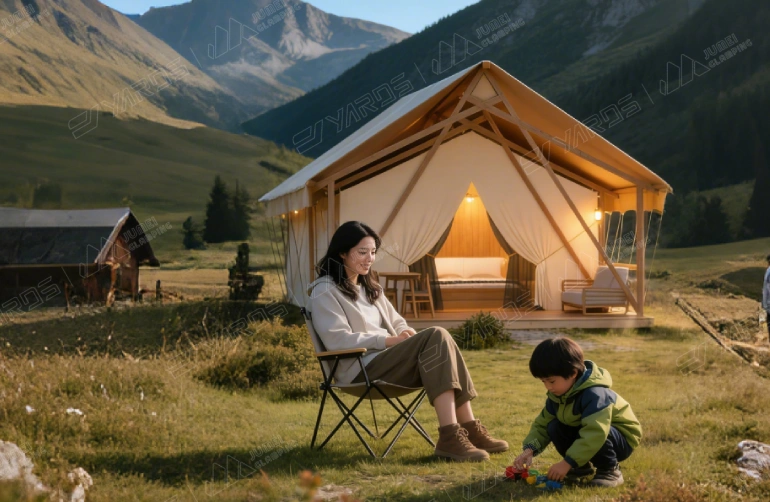


Custom Stretch Tents: How to Choose the Right Manufacturer
12/12/2025
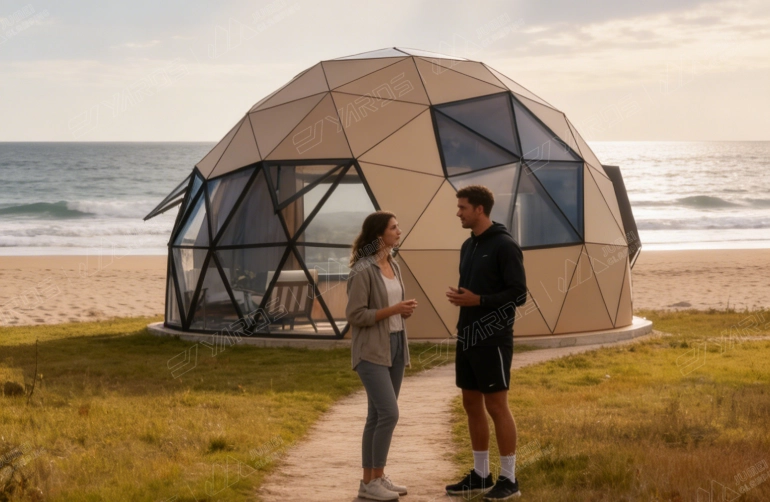
Glamping Glass Dome: Advantages Over Canvas Tents
12/15/2025Safari tent glamping projects are increasingly developed in unique natural locations such as deserts, hills, mountains, and remote landscapes. While safari tents are designed for durability and outdoor use, proper maintenance is essential to ensure long-term performance, safety, and guest comfort—especially in challenging environments.
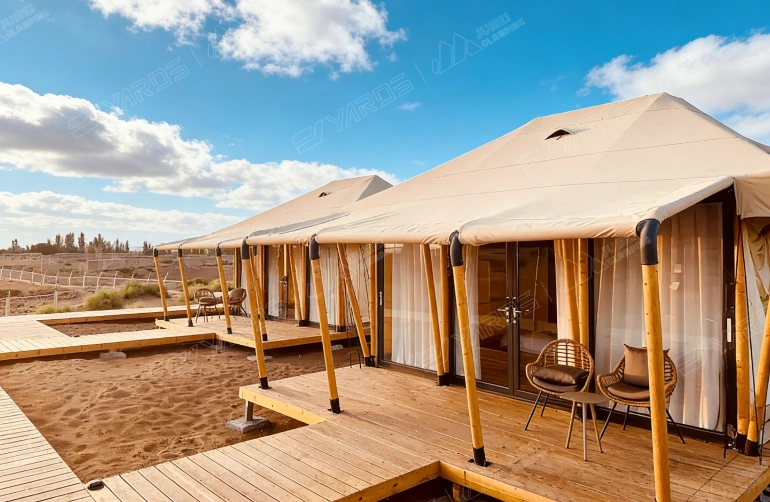
Maintenance of Safari Tent Glamping in Desert Environments
Protect against sand and dust
Desert areas experience frequent sandstorms and fine dust accumulation. Regular cleaning of tent fabric, zippers, windows, and ventilation openings prevents abrasion and premature wear. Installing windbreaks or strategic landscaping can help reduce sand impact.
UV resistance and fabric care
Strong sunlight accelerates fabric aging. Use safari tents with UV-resistant and anti-fade treatments, and periodically inspect roof membranes and canvas walls for discoloration or brittleness. Shade layers or roof covers can further extend fabric lifespan.
Ventilation and temperature control
High desert temperatures require proper airflow. Keep ventilation openings clear and use breathable liners to reduce heat buildup. In extreme conditions, insulation layers or reflective roof covers help improve indoor comfort.
Anchor and structure inspection
Desert winds can be strong and unpredictable. Regularly check ground anchors, steel frames, and tension points to ensure stability and safety.
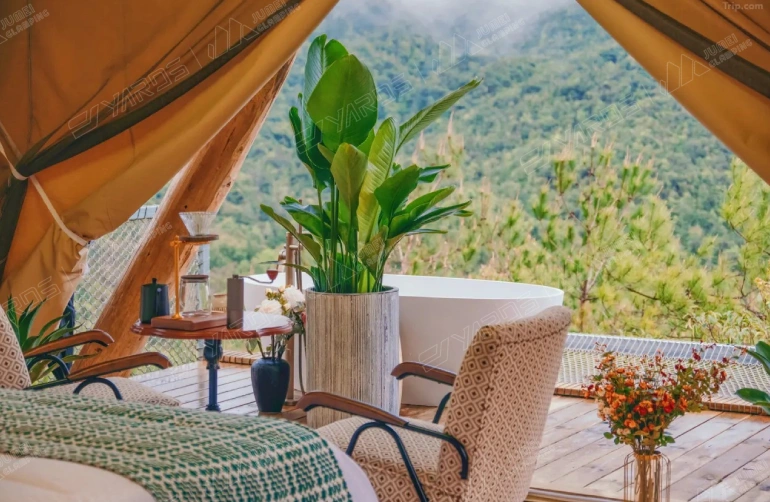
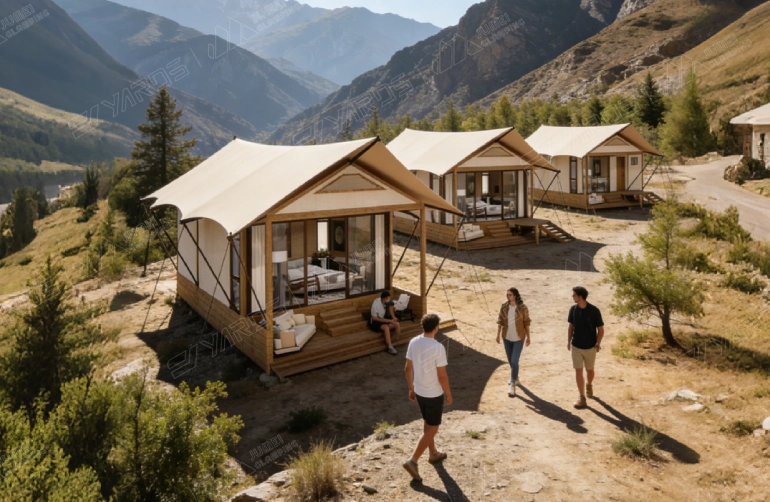
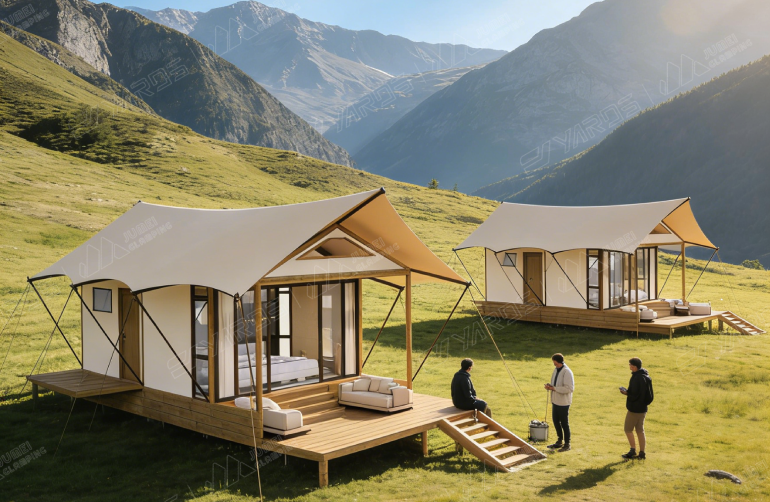
Maintenance of Safari Tent Glamping in Hills and Mountain Areas
Drainage and moisture management
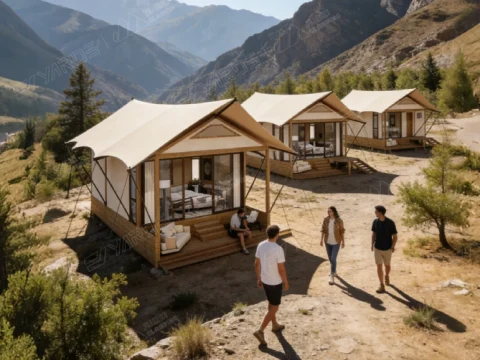
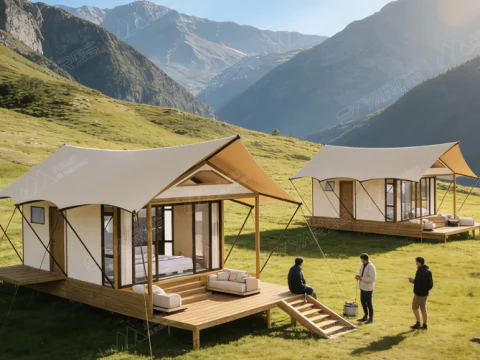
Hilly and mountainous terrain often experiences heavy rain and fog. Ensure the tent is installed on a raised platform with effective drainage systems to prevent water accumulation under the structure.
Wind and snow load checks
Higher elevations may face strong winds or seasonal snowfall. Periodically inspect structural connections, roof tension, and support poles. Remove snow accumulation when necessary to reduce structural stress.
Prevent mold and condensation
Cool temperatures and high humidity increase the risk of condensation. Improve airflow through vents and windows, and regularly clean and dry interior surfaces to prevent mold growth.
Foundation and ground stability
Soil movement can occur on slopes. Check the stability of foundations, decks, and anchor systems, especially after heavy rain or seasonal changes.
General Maintenance Tips for Special Environments
– Schedule routine inspections every 3–6 months
– Clean fabrics with mild detergents only
– Avoid sharp objects near tent surfaces
– Replace worn ropes, zippers, or connectors promptly
– Keep spare parts available for quick repairs
Conclusion
Safari tent glamping structures can perform reliably in deserts, hills, and other special environments when proper maintenance practices are followed. By focusing on fabric care, ventilation, anchoring, and drainage, operators can extend tent lifespan, ensure guest safety, and protect long-term investment value—even in the most demanding landscapes.